

Survivor 50
Chickens and the Limits of Empathy

(Spoiler alert: this post discusses a moment from last night’s episode of Survivor.)
I love Survivor. I’ve watched every season.
With the show approaching its 50th season, Chris and I recently went back and watched the very first season just to see how much it has changed.
The game is faster. The strategy is sharper. But what struck me most was how much the show has grown socially. Conversations about race, sexuality, age, neurodiversity, and culture happen openly now in ways that would have been rare when the show first aired in 2000.
Different people bring different values. Different values create tension. And tension is the engine of the game.
But there’s one recurring moment on Survivor that has been bothering me for a while now: when the tribe wins chickens as a reward.
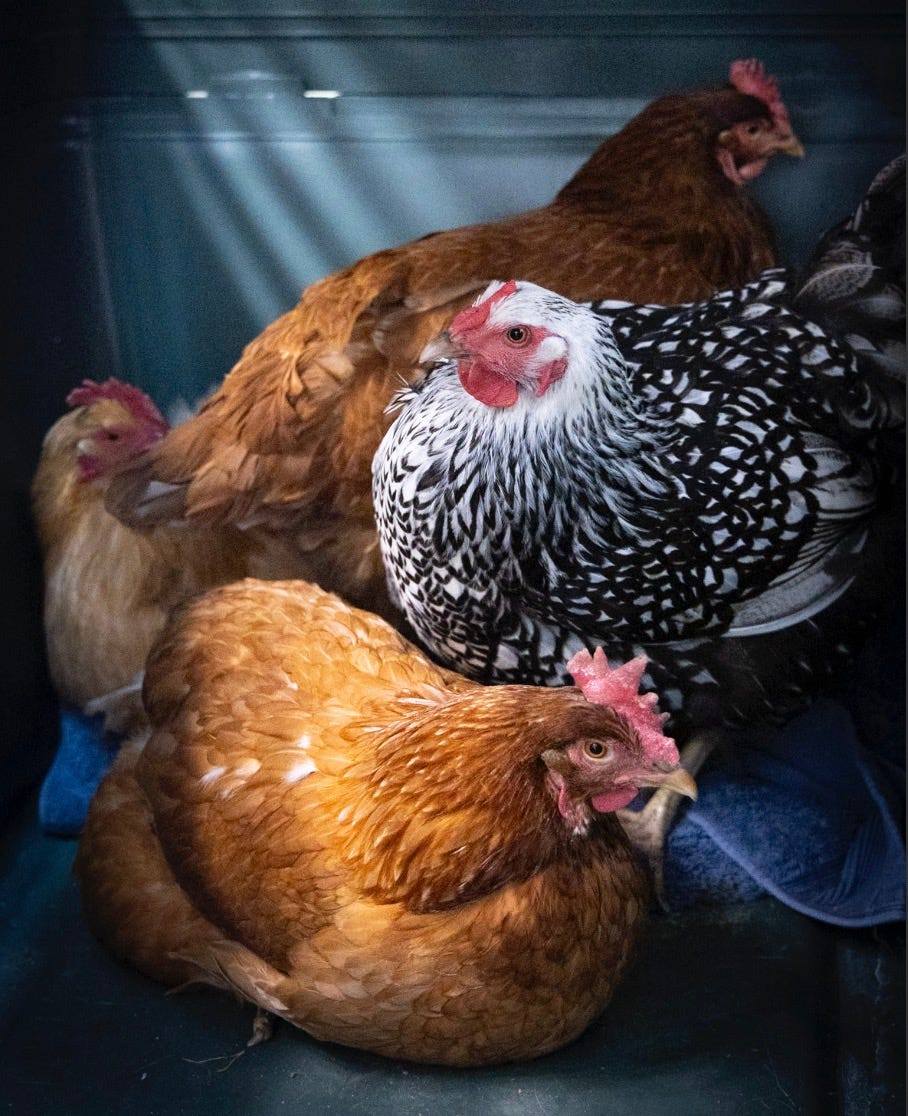
I actually wrote about this last season in a post called “The Hunter-Gatherer Illusion.” At the time, I was struck by how the show framed killing the chickens as a kind of primal survival test — as if the contestants were rediscovering some ancient human instinct.
But the more I think about it, the more something else stands out.
Host Jeff Probst has explained that the reason the show gives tribes chickens is because it creates a moral dilemma. Do they eat them, or not eat them?
It forces a conversation.
But listening to that explanation recently, I noticed something about how the dilemma is framed.
The question is always presented as whether the players should eat the chicken.
Not whether they should kill the chicken.
That small shift in language is doing a lot of work.
In reality, the dilemma isn’t about eating. It’s about deciding whether to take a life. But culturally, we almost always skip that step when we talk about animals used for food. The language jumps straight to the meal.
Eat the chicken.
Cook the steak.
Have some bacon.
The act that made the meal possible quietly disappears.
Survivor is interesting because it briefly exposes that hidden step. For a few minutes, the players have to confront it directly. You see some hesitation and discomfort. And then, just as quickly, the moment passes. The food is cooked. People are smiling again.
It’s a strange emotional pivot to watch.
What makes it even more interesting is that Survivor is a show that has spent years expanding empathy in other directions. The producers clearly value moments where people with different experiences and perspectives learn something about each other.
But when animals enter the story, the moral conversation suddenly narrows. The question becomes simple: eat them or don’t eat them.
And that’s where I find myself pausing.
Because this isn’t a true survival situation. The players are hungry, but they’re not fighting for their lives. The chickens aren’t part of the environment. They’re introduced by production specifically to create a moment of tension.
In other words, the dilemma itself is part of the show’s design.
To be clear, this isn’t really a criticism of the players. Most of them are just responding to the situation they’re placed in. And it’s not even entirely a criticism of the show itself, which has done a lot to evolve with the times.
If anything, the moment reveals something bigger about all of us.
Our culture has become much more comfortable examining questions of fairness, representation, and empathy when it comes to other people. That circle of concern has expanded dramatically in the last few decades.
But when it comes to animals, many of us still haven’t really started the conversation.
And watching a moment like that play out on television makes that gap visible in a way that’s hard to ignore.
Survivor calls the chicken reward a moral dilemma.
Maybe the real dilemma isn’t just what the players do with the chickens.
Maybe it’s why that decision still feels so normal to the rest of us watching from our couches.